I make music with computers. But I am also deeply into creating tools for making music. And this is why I became one of the creators of a quite amazing piece of commercial music software, Ableton Live. Ableton was founded by my former Monolake partner Gerhard Behles, together with a developer, Bernd Roggendorf and a finance person, Jan Bohl.
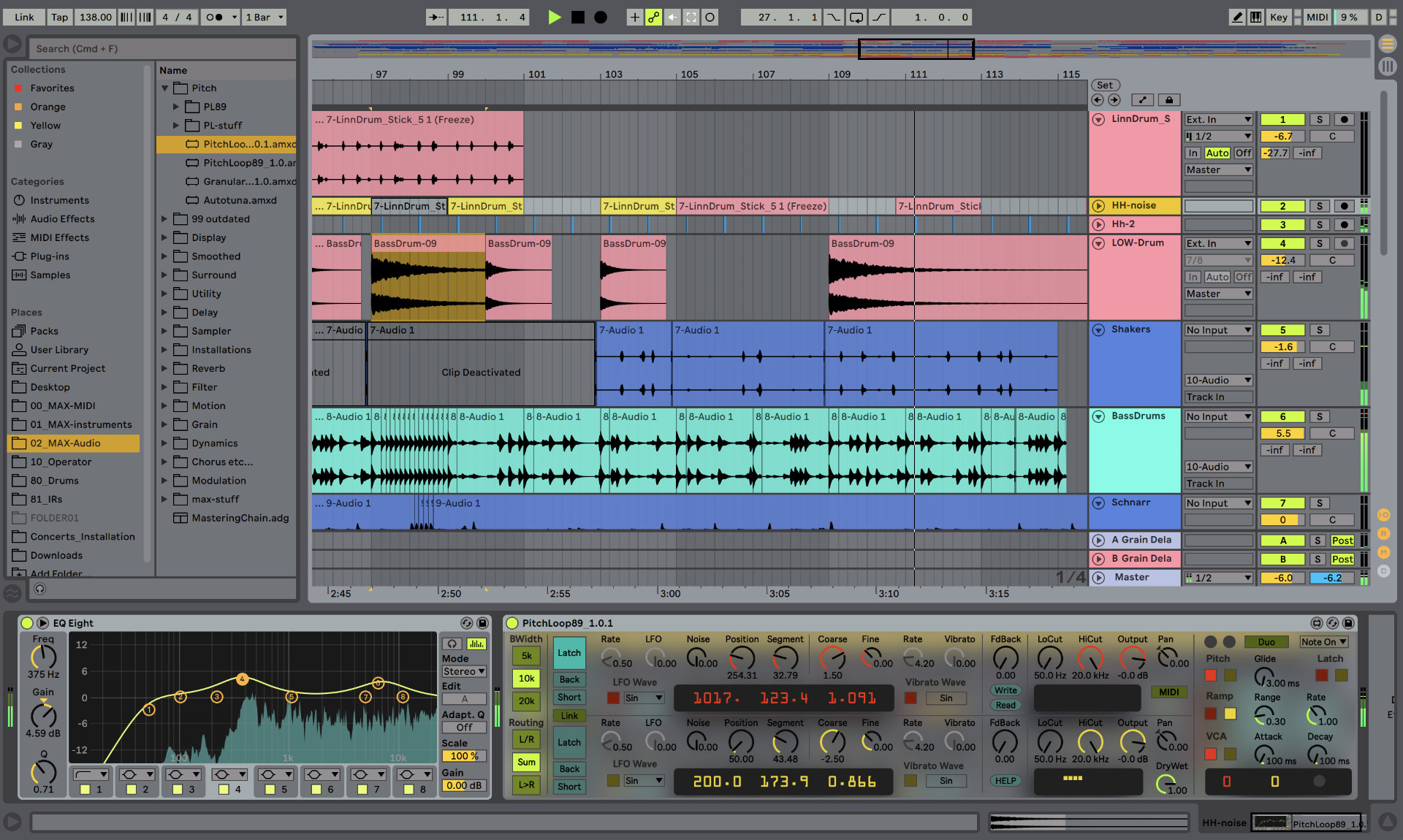
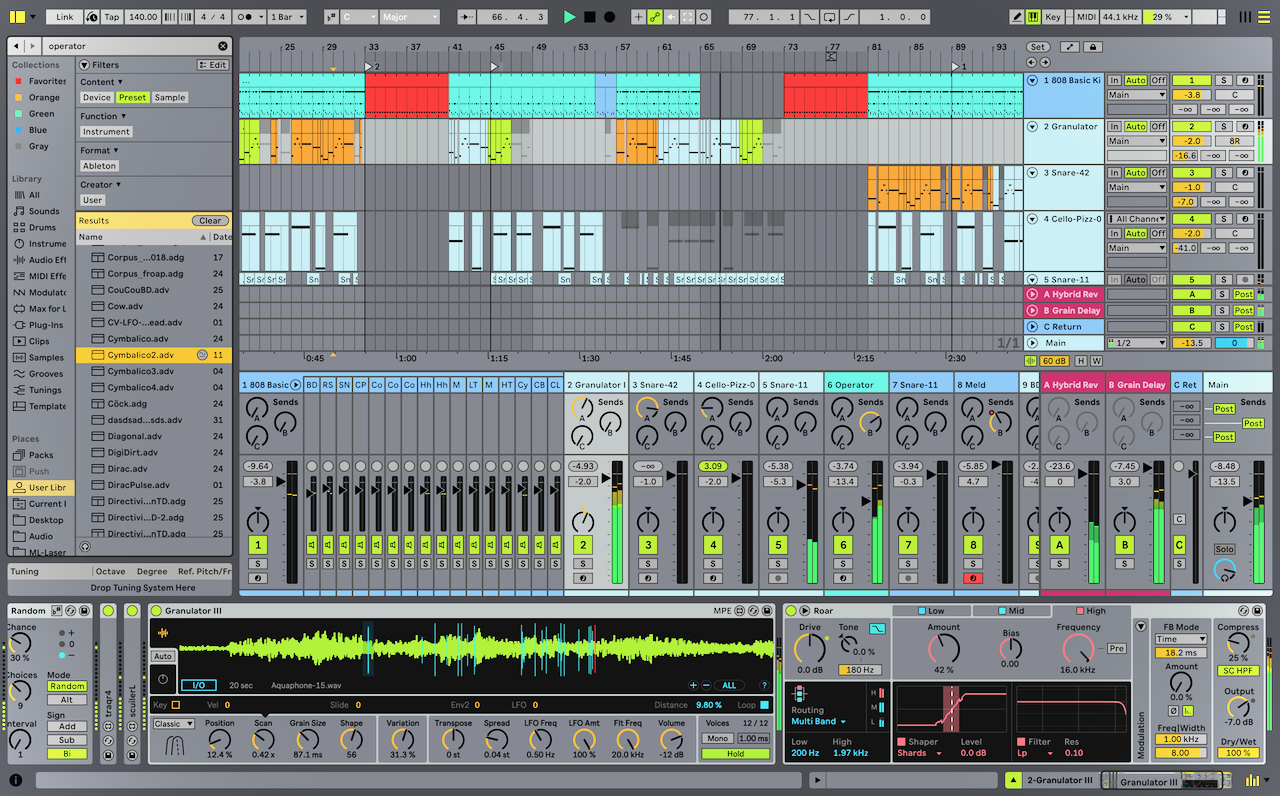
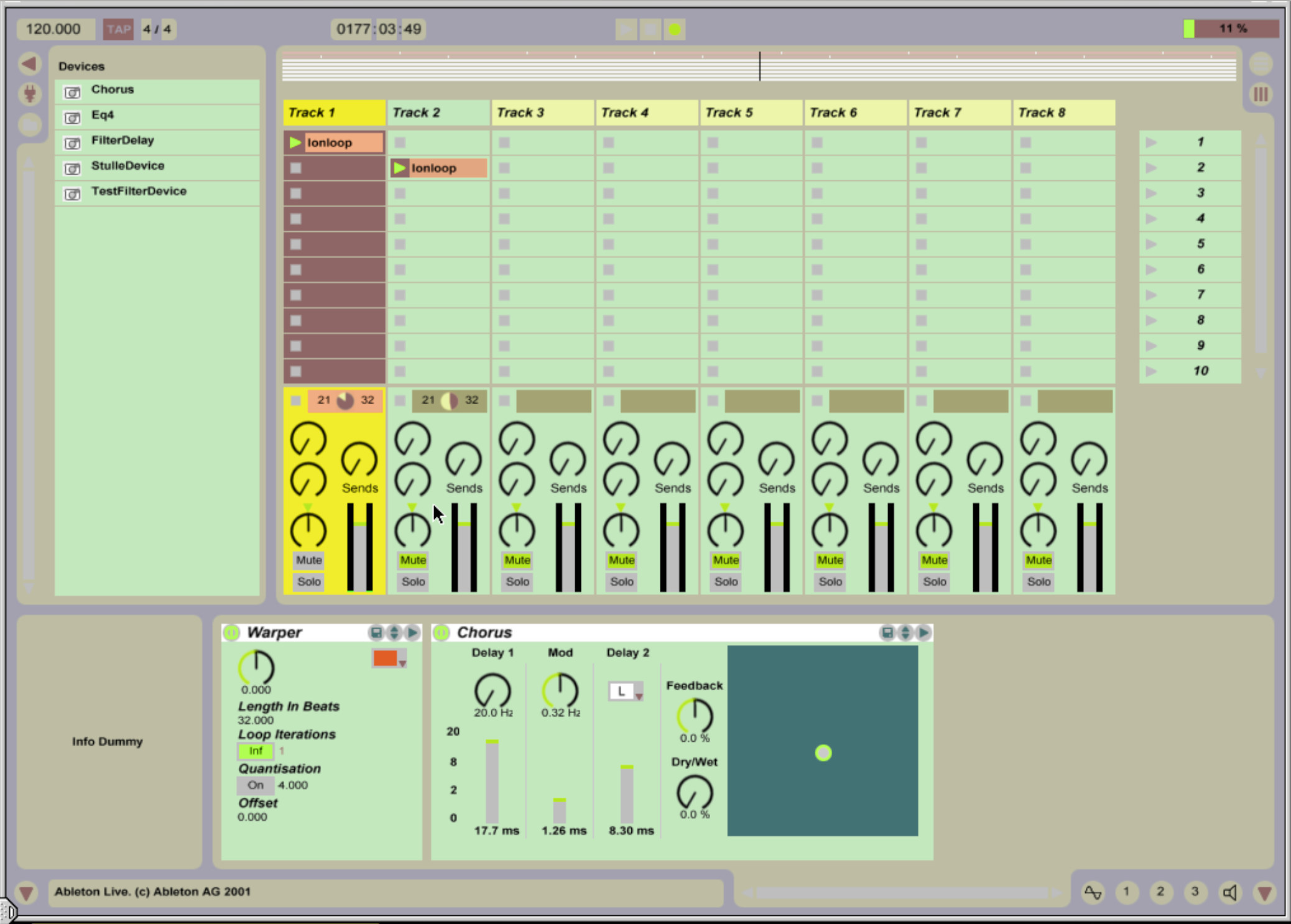
Image: screenshot of a pre-release version from November 2000. [Large version]Image: First presentation of Live at NAMM, January 2001. [Large version with text]
One of my most important roles at the company was being part of the specification team. Specification is the core of each software development process. It means defining how things should be, and than discussing with the developers how it can be implemented best. Specification is a huge area, ranging from tiny but important details to big general questions. Specification is one of the most exciting, most annoying, most rewarding and most frustraiting jobs in the software world.
At Ableton, the specification group during the first then years of the company was small, consisting in the early years mainly of Gerhard, two colleagues and me. Plus lots of input and discussions from and with the developers. Specification can be quite general and almost esoteric, when we try to imagine how music software should look like in the future, and when we try to come up with new concepts for problems. Just like we did then over a decade ago, when we created the first and still unique non-timeline based professional audio software.
Notable early Live effects I created are the Grain Delay, Vinyl Distortion, Chorus, EQ8, Erosion, Resonators, Beat Repeat, Simpler and the Saturator (which contains a bit hidden complex wave shaping tool !). While I am fine with the results of my work on those, there is one single device that deserves to be mentioned more explicitely: The Operator, a synthesizer in which I put an enormous effort to make it simple but powerful. Operator became a synthesizer I use extensively for my own music, and it became a synthesizer that is loved by its users because it can create a vast range of interesting and unique sounds, it is deep and rewards exploration. An still it is simple to use and has a clear structure.
Image above: Operator detail
Image right: MAX patcher for the Cyclone installation
When we started working on Live, and finally showed a first version in spring 2001, the big music software companies did not take us very serious. "A laptop on stage? You must be crazy!" or "This interface looks horrible!" were reactions we got often. However, we are now one of the most successful music software company out there, with an incredible number of customers all over the world, and our software massively changed the way electronic music is created and performed.
It became very easy to make music. And this is bad. Everyone can make a boring uninspired piece of music in a lunch break, and it will sound good and 'professional'. It became really very, very easy to make music with our software. And this is great! Because it not only allows highly musical people with limited budget to create fantastic and complex music, it also allows those folks like me to dive deeper into the creation and exploration of music, sound and structure than ever before. I never spent less time thinking of technology and more time making music with it. Well, apart from my engagement with the company.With the ability to extend the functionality of Live by integrating MAX/MSP/Jitter patches with 'MaxForLive', the software became a tool that combines an open structure with a streamlined workflow in an pretty exciting way. I am curious to see how this will grow in the future...
I more or less left Ableton in 2009 to focus more on my art and to dedicate more energy to my job as professor for Sounddesign at the Berlin University of Arts.However, after being so closely involved with the company and the people who work there for almost a decade , and my role in the development of the product itself, I am having a hard time cutting myself off from Ableton completely. I am still involved in the development of Max4Live.